Diamond Drilling & Controlled Demolition
Diamond Drilling
Pre-Construct Groups division - MTF Diamond Drilling and Controlled Demolition Ltd has adopted advanced diamond drilling technologies, including stitch drilling, core drilling, and mining barrel drilling. Effective diamond drilling requires considering factors such as the material and surface type, hole size and diameter, structural resistance, and selecting suitable diamond compounds for efficient work. Pre-Construct Group can provide tailored solutions addressing these factors as needed.
Diamond Core Drilling
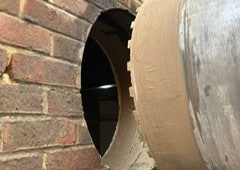
Diamond Core Drilling is a distinctive drilling method that uses a rotary, non-percussive technique. The drilling systems typically operate with 110V motors but can also be powered by 415V electrical systems, hydraulics, or compressed air.
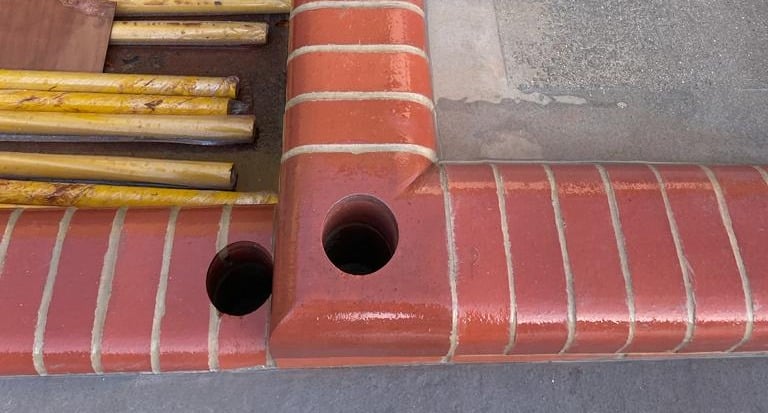
Diamond Drilling uses drill bits embedded with industrial diamonds, designed to penetrate the toughest materials such as reinforced concrete, masonry, tile, stone, and asphalt. Its non-percussive cutting method preserves the structural integrity of buildings while operating at low sound frequencies. Diamond Drilling produces clean, precise holes ranging from 10mm to 1500mm in diameter and can reach virtually any depth.
How it Works
To understand how Diamond Drilling is performed, it is essential to examine the key components of a Diamond Drilling System: the mounted rig, the electric or hydraulic-powered drill, and the diamond bit. The rotary drill motor powers the system, which is securely attached to the surface being drilled via the rig. The rig is then fitted with the appropriately sized diamond drill bit for the task.
A diamond bit is a cylindrical tool with an open centre section, consisting of a steel tube with diamond segments welded to its cutting face, which contacts the surface being drilled. During drilling, the bit rotates while water cools the drill face and flushes away debris. The pressure, rotary speed, and water flow are adjusted based on drilling conditions and the type of surface.
Diamond Stitch Drilling
Diamond Drilling is a highly effective method for creating holes in reinforced concrete walls, floors, and other structures. However, its limitation lies in the maximum hole size, which is restricted by the largest available diamond drill bit, measuring up to 1500mm in diameter. Due to it generating minimal vibration, it is safe and effective for both delicate and heavy-duty applications, ensuring the structural integrity of the surrounding material remains unaffected.
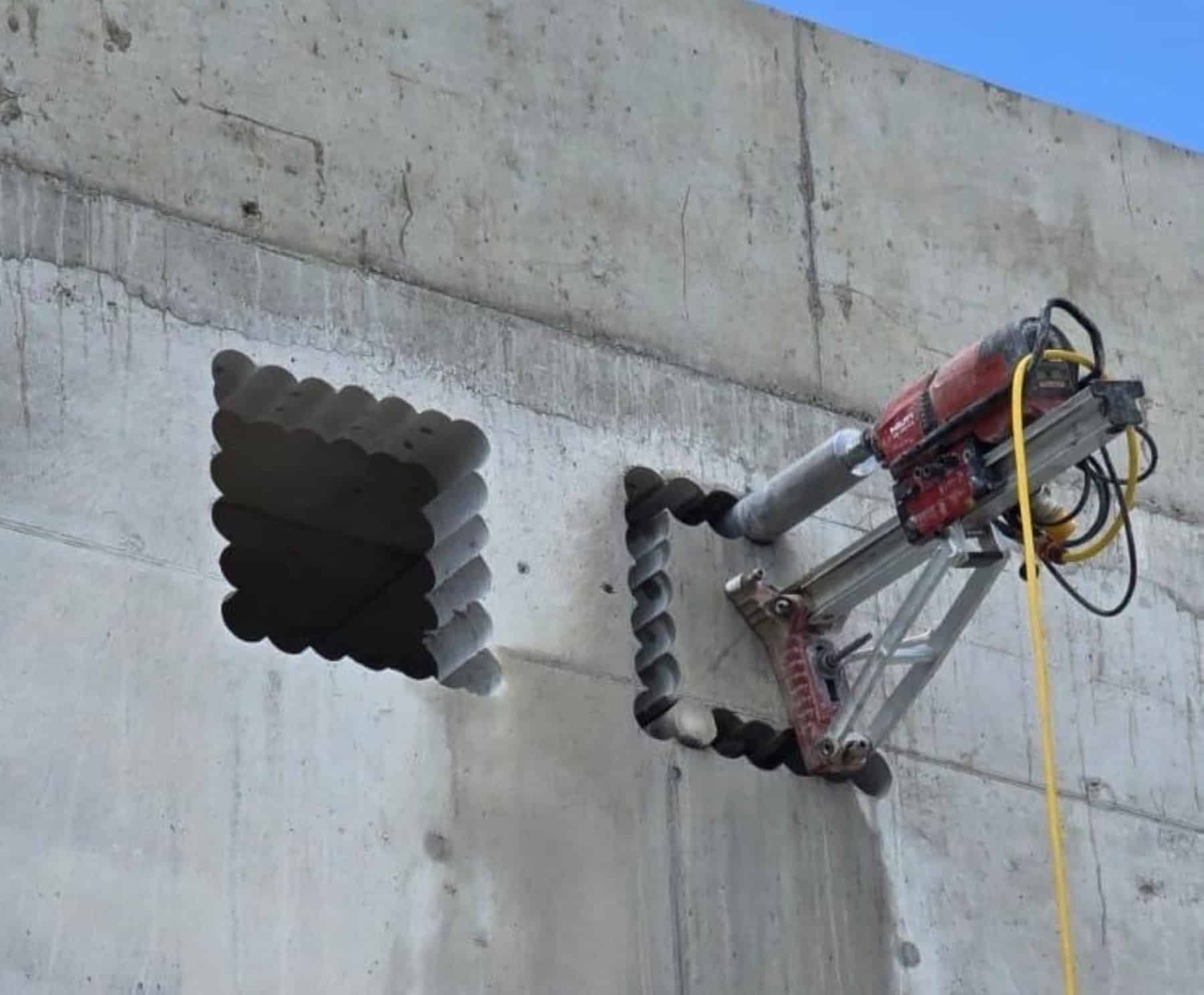
Diamond Stitch Drilling addresses the limitation of conventional Diamond Drilling by allowing the creation of holes that exceed standard size and depth limits. This method involves drilling multiple overlapping holes to form openings of any shape and size through materials like reinforced concrete, stone, brick, and blockwork. Stitch Drilling offers an efficient, quiet, and dust-free alternative to traditional demolition or breaking methods.
Once the perimeter of the opening is formed, the isolated section can be either hydraulically burst and broken or lifted out. Depending on the type of opening required, the edges can then be smoothed to create a perfectly shaped opening, such as a square or circle.
Soft-Strip Demolition
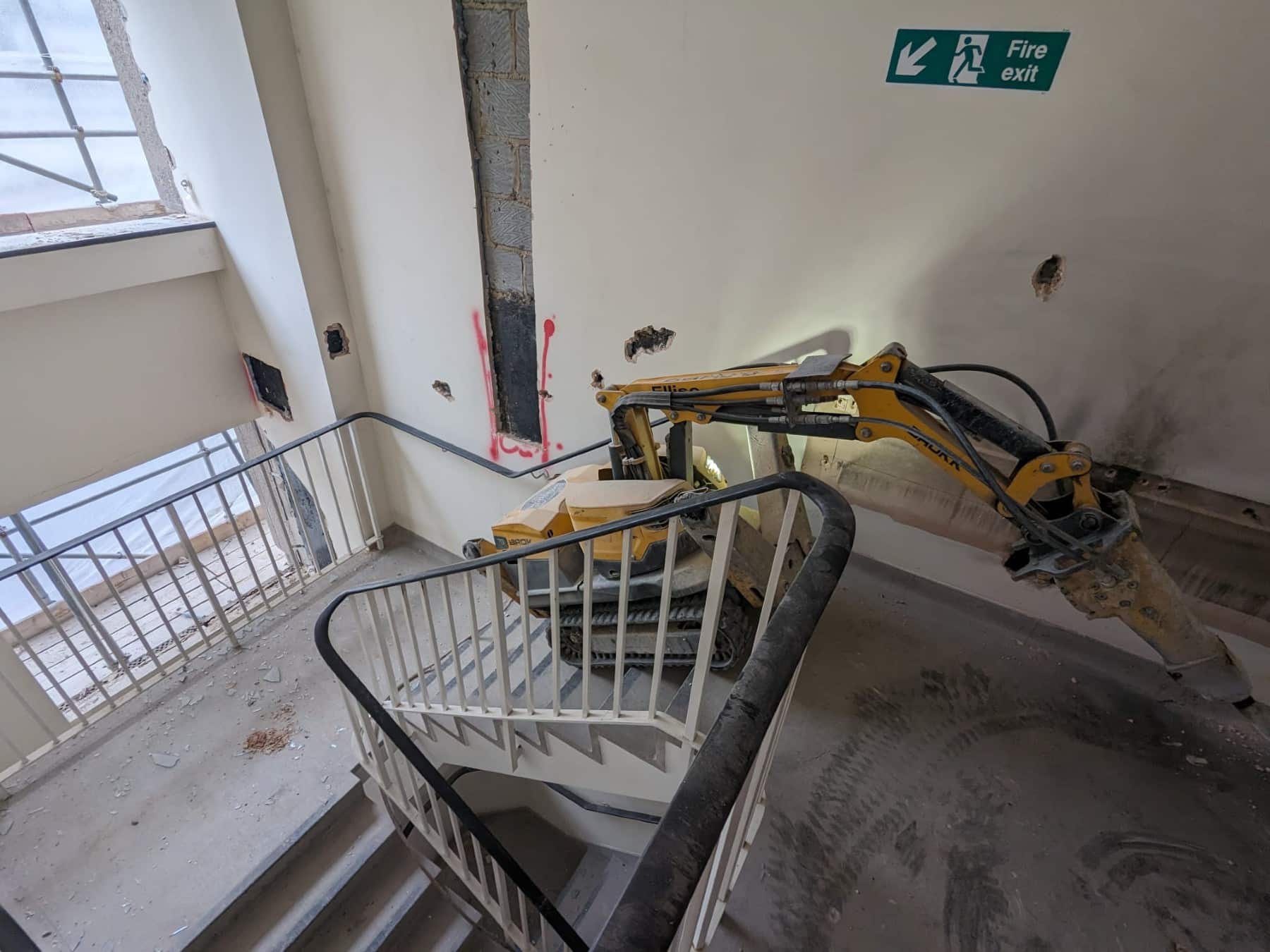
Selective Demolition, also known as Strip-Out or Soft-Strip Demolition, targets both the interior and exterior elements of buildings. Its primary goal is to recover, reuse, or recycle as much material as possible in the safest and most cost-effective manner. Although this method can be labour-intensive and time-consuming, Pre-Construct Group utilises robotic plant in conjunction with trained staff to accelerate specific tasks, resulting in significant time savings.
Soft-Strip Demolition involves the careful removal of non-structural elements within a building to facilitate remodelling or refurbishment. Interior Demolition activities can encompass a wide range of tasks, from removing floor coverings, temporary ceilings, and floors to the removal of partitions, lighting cables, air conditioning systems, and more. Soft-Strip Demolition may also include the removal of cable trays, mechanical and electrical services, telecommunication lines, and electrical wiring. Soft-Stripping is a precise and efficient way to prepare a building for its next phase of redevelopment.
Soft-Strip is typically carried out as a standalone exercise at the start of a contract, as it is essential for preparing spaces for refurbishment or redesign.
Controlled Demolition
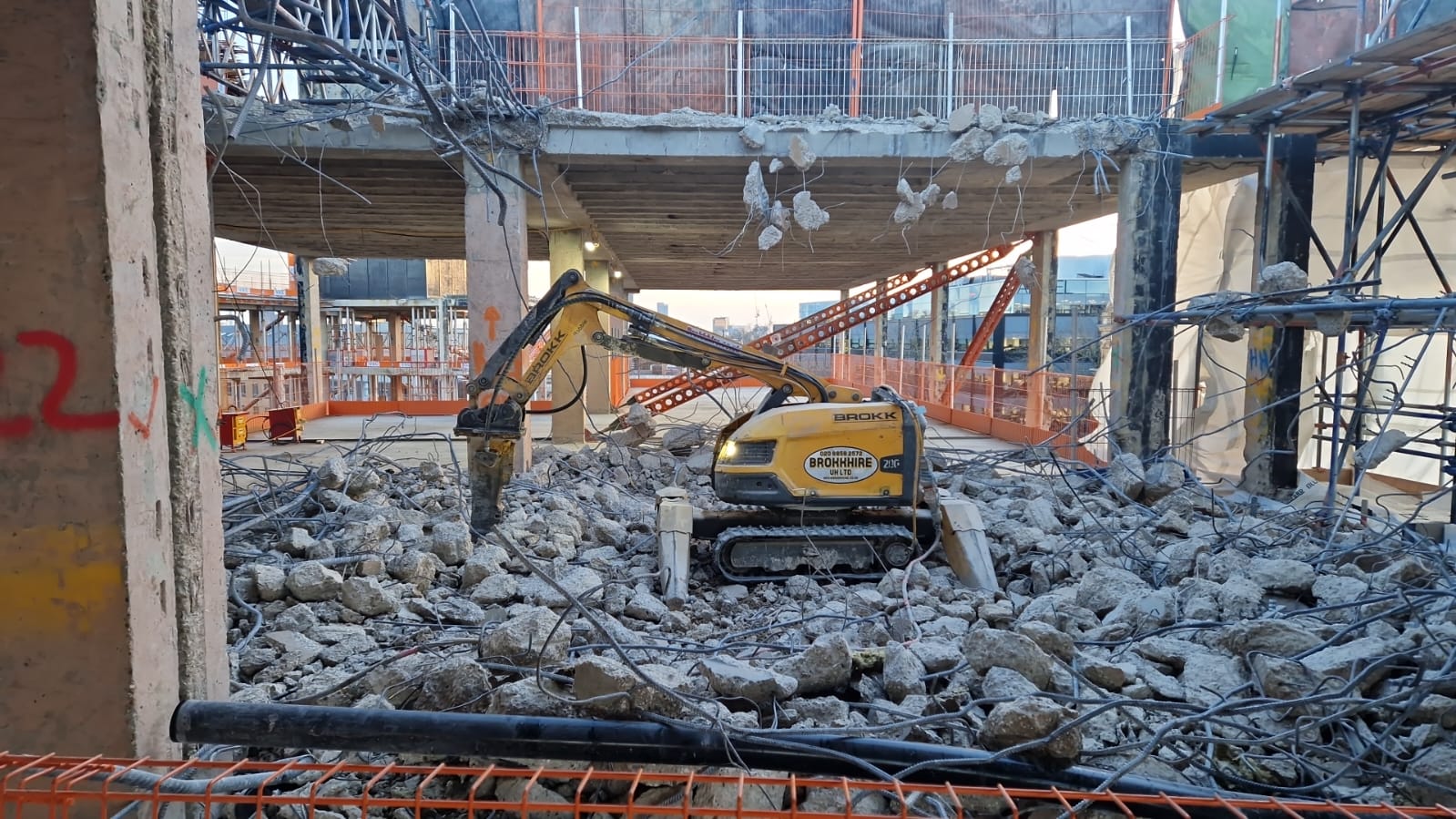
Combined with the latest plant, specialist equipment, and environmental management tools, Pre-Construct Group can execute any demolition project safely, sustainably, and efficiently. With extensive experience working in sensitive environments such as rail sidings, nuclear facilities, aviation sites, and public sector projects—including hospitals, educational institutions, and mainstream construction.
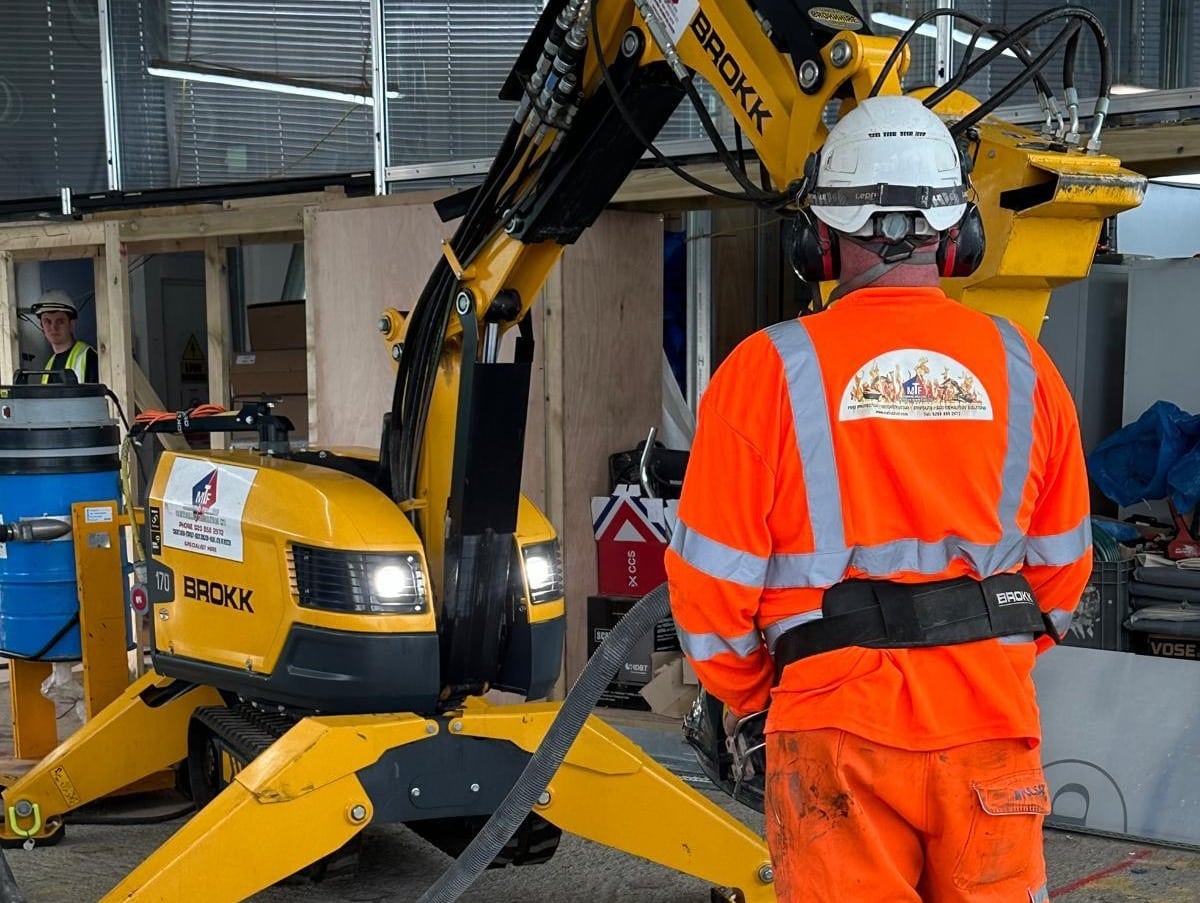
The construction industry is currently benefiting from one of the most advanced demolition methods: robotic demolition machines. These highly powerful, remotely controlled machines enable operators to perform challenging demolition tasks from a safe distance, enhancing safety and precision.
Operating these machines requires highly trained, skilled, and experienced operators. Strict adherence to the manufacturer’s guidelines is essential for safe and effective use. Daily inspections of the machines must be carried out by competent personnel before operation. Additionally, working platforms and floor loadings should be regularly checked for stability. Operators must also monitor fall zones to ensure debris falls within a safe distance, and debris must be cleared periodically to maintain a safe working environment.
Robotic Hydraulic Crunching
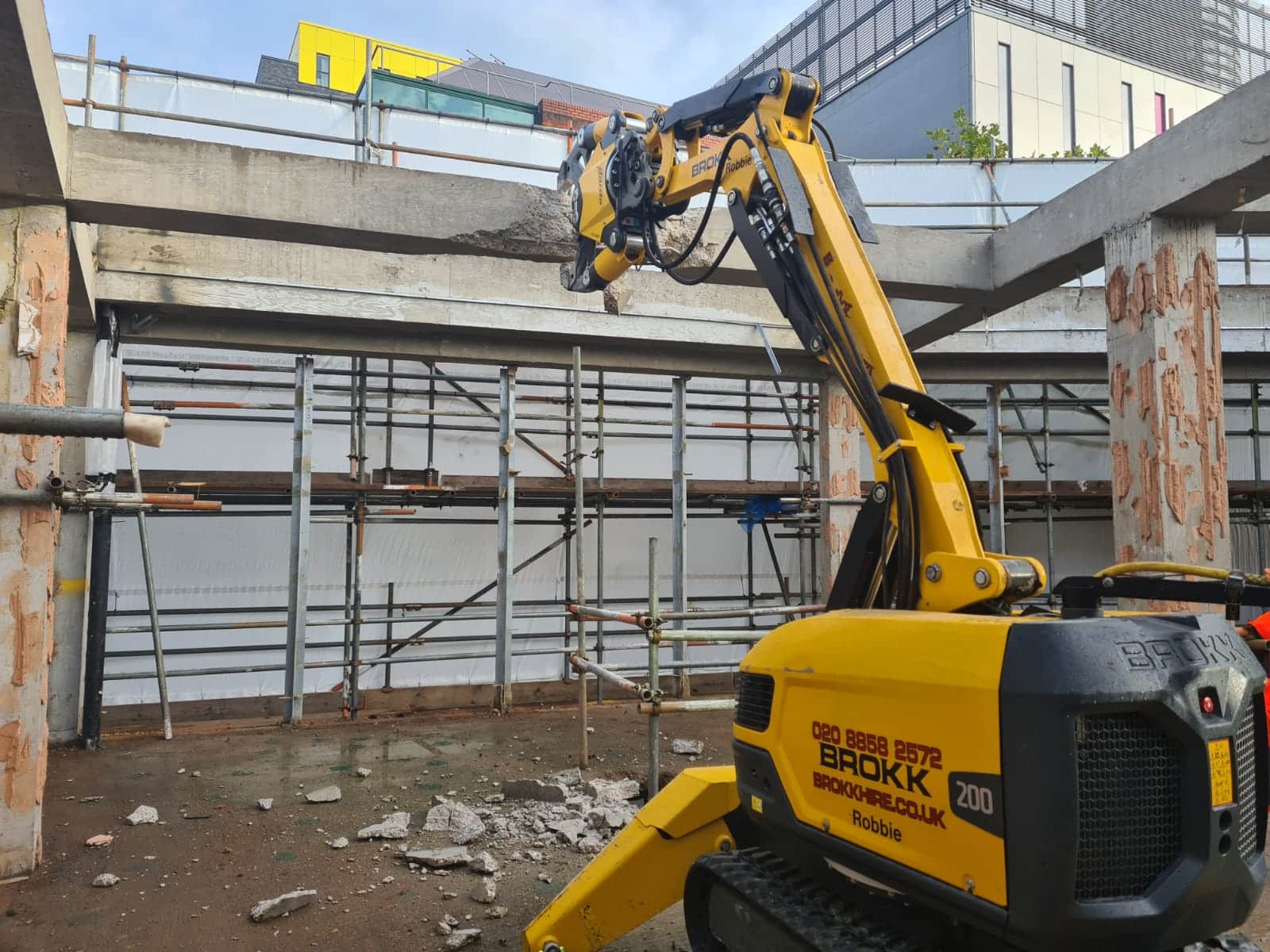
Cruncher Jaws are positioned over the section of concrete to be demolished. The operation is controlled remotely through hydraulic pressure, which is applied as the jaws close, effectively reducing the concrete to rubble. This process is considered non-percussive, meaning it has no detrimental effect on the retained structural integrity of the building. Additionally, this system is virtually emission-free, eliminating noise, dust, vibration, and water use. Unlike Concrete Bursting, there is no need for pre-drilled holes, and the resulting rubble is much easier to remove.
Why Choose us
Pre-Construct Group’s sector - MTF Diamond Drilling and Controlled Demolition Ltd have embraced advanced Controlled Demolition technologies, including Robotic Demolition, Concrete Bursting, Hydraulic Demolition, Cut & Carve, and Soft-Strip methods. We pioneer the use of the latest plant and techniques to deliver quick, safe, and efficient demolition solutions within the construction industry. This enables our customers to benefit from minimal disruption, facilitating regeneration and development projects. Pre-Construct Group boasts an extensive range of robotic plant and equipment tailored to meet every requirement. As a result, we are widely regarded as a leading contractor within the Controlled Demolition industry.
Need Specialist Drilling or Controlled Demolition Support?
Get in touch with our team to discuss safe, accurate and efficient solutions for your next project.